Search
 Login
Login


Abaloparatide
You say abaloparatide like this: a-bal-oh-pa-ra-tide
(Brand name is Eladynos®)
Abaloparatide is a medicine for osteoporosis. It can help strengthen your bones, making them less likely to break. Abaloparatide may be a treatment option if you have a very high chance of breaking a bone.
Abaloparatide is an injection that you give yourself once a day. It cannot be prescribed by your GP. You will need to be referred to an osteoporosis specialist to prescribe it for you.
Who is this information for?
This information may be helpful if you, or someone close to you:
- have osteoporosis and a very high chance of breaking a bone
- are thinking about starting abaloparatide
- want to know more about taking abaloparatide, including the possible side effects
- are already taking abaloparatide and have questions or concerns.
What are the benefits of abaloparatide?
Abaloparatide can help strengthen your bones and reduce your chance of broken bones, especially in your back.
How does abaloparatide work?
Your bones change throughout your life. There are cells inside your bones that work to help keep them strong. This process is called bone remodelling. If this process is in balance, your bones should stay healthy and strong. But if the process becomes out of balance, it causes changes to your bones. They become weaker and more likely to break.
Abaloparatide helps your body make new bone by stimulating the cells that build new bone. This helps to strengthen your bones. This is different to how most other osteoporosis medicines work. Medicines that work by increasing the growth of new bone are known as anabolic medicines.
Who can have abaloparatide?
Abaloparatide is a treatment option for osteoporosis after the menopause in women, trans men, and non-binary people if your chance of broken bones is very high. These people are likely to benefit most from anabolic medicines like abaloparatide.
People with a very high risk of breaking a bone may include those with:
- a spinal fracture in the last two years
- two or more vertebral fractures at any time
- a T-score of -3.5 or lower
- high dose steroid treatment
- a very high risk score on a fracture risk assessment (FRAX).
Who should not have abaloparatide?
Abaloparatide may not be suitable for you if you:
- have or have ever had bone cancer or another cancer that has spread to your bones
- have had radiotherapy to your bones
- have a high level of calcium in your blood (hypercalcaemia)
- have severe kidney problems
- have high levels of the enzyme alkaline phosphatase in your blood. Alkaline phosphatase (ALP) is an enzyme found in the liver and bones.
- are pregnant, breast-feeding, or could still get pregnant.
Taking medicine for osteoporosis?
Get tailored information about your osteoporosis treatment, complete a short survey to get your plan today
How will I get my abaloparatide prescription?
A hospital specialist will prescribe abaloparatide for you.
A homecare company will deliver your abaloparatide to an address of your choice. This will usually be your home. Homecare companies prepare and deliver medicines to you directly, so you do not need to collect them from a pharmacy. The NHS pays them to provide this service. They may also collect used injection pens and needles. Check with your homecare company about the service they provide.
Before you start your treatment, someone from the homecare company will visit you and show you how to inject yourself. They should provide you with a contact number in case you have any problems.
How do I take abaloparatide?
Abaloparatide is an injection that you give yourself. Before you start your treatment, someone from the homecare company will visit you and show you how to inject yourself. If you prefer, they can show a family member or carer how to give you the injection.
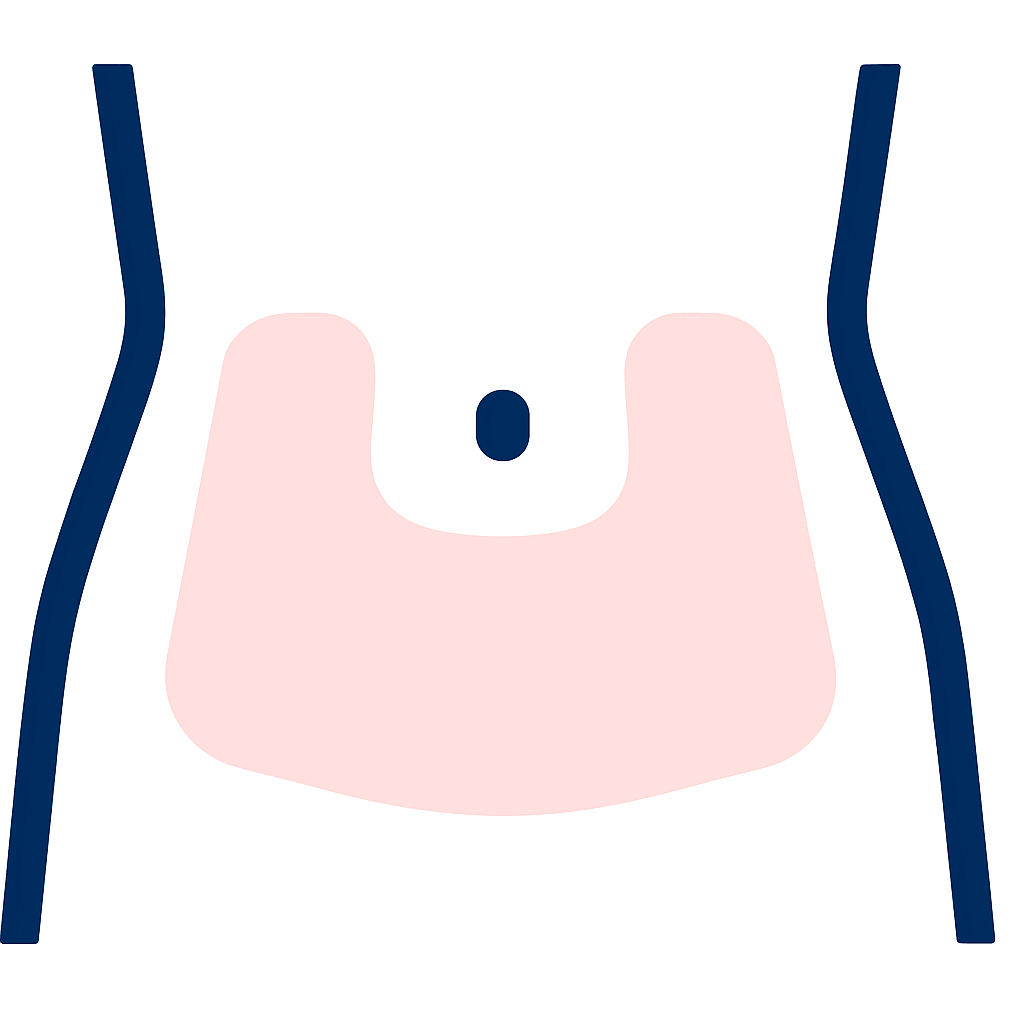
An abaloparatide injection is given just under the skin in the lower part of your tummy. The area for injection is shown in pink in the image below. Do not inject into the area 5cm around your tummy button (navel).
Abaloparatide comes as a pre-filled pen for injection. Each pen has enough medicine for 30 days.
The injection pen comes with small needles. You will need to use a new needle each time you inject yourself. Each time you inject, choose a different place from the last time. This will help to reduce the risk of a skin reaction where you inject. Do not inject where the skin is tender, bruised, red, scaly, scarred, or hard.
After the injection, dispose of the used needle in a ‘sharps bin’. This is a small plastic bin with a lockable lid. Your homecare services company should provide you with a sharps bin and tell you how to get it collected. If not, your GP or pharmacist may be able to help.
What is the dose of abaloparatide?
The dose of abaloparatide is one injection once a day. The injection pen is set up to deliver one dose (80 micrograms) per injection.
What should I do if I miss a dose of abaloparatide
Try to have your abaloparatide injection at the same time each day. This will help you remember to take it.
If you miss a dose:
- If it is less than 12 hours since you should have had your abaloparatide injection, have it as soon as possible. Then have your next dose at the usual time the next day.
- If it is more than 12 hours since you should have had your abaloparatide injection, do not have the missed dose. Have your next dose at the usual time the next day.
Do not use a double dose to make up for a forgotten dose. And do not use more than one injection on the same day.
For more practical advice about taking your abaloparatide sign up for our free medicine support service today.
How should I store abaloparatide?
Abaloparatide comes as a pre-filled injection pen. Each pen has enough medicine for 30 days.
- Before you first use the pen, keep it in a fridge between 2℃ and 8℃.
- After the first use of each pen, you do not need to keep the pen in the fridge. You can keep the pen at room temperature (up to 25℃) for up to 30 days.
- Do not use the pen after 30 days. Throw it away after 30 days, even if there is some medicine left in it. Ask your pharmacist or homecare service how to throw away medicines you have not used.
- Do not keep the pen in the freezer. And do not place it close to the ice compartment of the fridge.
- If the medicine in the pen is or has been frozen, do not use it.
You might want to note the date you start a new pen on your phone or your calendar. This will help you to remember when the 30 days is up and you need a new pen. You might also want to make a note of the batch number and expiry date. Some people make note where they inject each time. This is so they inject in a different place each time.
Watch our BoneMatters film on self-injectable osteoporosis medicines. It has tips on starting, storing and travelling with abaloparatide.
How long will I take abaloparatide for?
You can take abaloparatide for up to 18 months. After this, your doctor is likely to recommend that you start another medicine. This will usually be a type of bone-strengthening medicine called a bisphosphonate. But the choice of medicine will depend on what is right for you.
How will my treatment be monitored?
Before you start treatment, your doctor will take your blood pressure and check your heart. If you have high blood pressure or heart disease, your doctor may want to monitor you more closely.
Your doctor might also recommend blood tests to make sure that abaloparatide is right for you.
You will not usually need further regular monitoring while you are taking abaloparatide.
Abaloparatide will reduce your chance of breaking a bone. But it cannot remove the chance completely. If you break a bone while taking abaloparatide speak to your GP or hospital specialist.
You should have a treatment review after 18 months of taking abaloparatide.
If you have not received an appointment letter, contact your GP surgery or hospital specialist.
Your treatment review will usually involve a fracture risk assessment. You may also have a bone density scan. Your doctor will also consider other things, such as whether you’ve broken any bones since starting abaloparatide.
What are the possible side effects of abaloparatide?
As with any medicine, abaloparatide may sometimes cause side effects. It is important to remember that side effects are less common than people think. For example, if 1 in every 10 people who take abaloparatide feels sick, the other 9 people will not.
Even if you do get side effects at first, they usually improve quickly. And there are often ways to manage them.
Some of the most common side effects of abaloparatide are listed below. For a full list of side effects, see the patient information leaflet that comes with your medicine. If you do not have a copy, ask your doctor or pharmacist for one.
|
|
|
|
|
Side effect |
How many people might have this side effect |
What can I do about it? |
|
Increased levels of calcium in your urine (pee). This can affect the way your kidneys work and can lead to kidney stones. |
About 10 in every 100 people |
Make sure you drink plenty of water. Most people will not experience any symptoms. But contact your doctor if:
|
|
Dizziness |
About 10 in every 100 people |
If you feel dizzy do not drive or use machines until you feel better. |
|
Pain in your back or joints |
Fewer than 10 in every 100 people |
This usually gets better as your body gets used to the medicine. A simple pain-relieving medicine such as paracetamol may help. |
|
Headache |
Fewer than 10 in every 100 people |
A simple pain-relieving medicine, such as paracetamol, should help. |
|
Feeling sick (nausea) |
Fewer than 10 in every 100 people |
If this does not get better, speak to your doctor. They can talk to you about ways to manage it. |
|
Increase in blood pressure |
Fewer than 10 in every 100 people |
If you have high blood pressure or heart disease, your doctor may want to monitor you more closely. |
|
Palpitations (fast or irregular heartbeat) |
Fewer than 10 in every 100 people |
If you experience this, it should go away within a few hours of your injection. Make sure your doctor knows if you have an irregular heartbeat, such as atrial fibrillation (AF). |
Some people feel dizzy or light-headed after their abaloparatide injection. This may be because of a fall in your blood pressure. To reduce the chance of this happening you can sit or lie down for twenty minutes after your injection. Some healthcare professionals recommend taking abaloparatide at bedtime to reduce the impact of the side effects.
If you do get any side effects that do not go away, contact your osteoporosis team who prescribed abaloparatide for you, your GP or pharmacist. They may be able to:
- make sure the problem is not caused by any other medicine you are taking. For example, calcium supplements can also make you feel sick
- find out what is causing the problem
- consider other treatments that may suit you better.
Speak to your doctor, specialist nurse or pharmacist before stopping this medicine.
Because abaloparatide is a new medicine, it is being closely monitored. We encourage you to report any side effects to the Medicines and Healthcare Products Regulatory Agency (MHRA). You can do this through the Yellow Card scheme online or by downloading the MHRA Yellow Card app (yellowcard.mhra.gov.uk). This helps collect important safety information about medicines.
How do I decide about taking abaloparatide?
Your doctor will work with you to try and find the osteoporosis treatment that is best for you. This might involve doing blood tests and asking you questions before you start treatment.
As with any treatment, there are advantages and disadvantages to taking abaloparatide. Think about these when deciding whether to have abaloparatide. And about what’s important to you. Here are some things you might want to consider.
Advantages
- Abaloparatide can help to reduce your chance of broken bones, including in your back. This can help you stay independent and do the things you enjoy.
- It’s given as an injection, which is helpful if tablets are a problem for you.
- You will give yourself the injection at home. So, you will not need to visit the hospital or GP surgery for your treatment.
Disadvantages
- As with all medicines, some people get side effects.
- Some people don’t like the idea of injections. You will need to inject yourself every day. But with practice, the injections can be a simple, easy part of your daily routine.
- You can only have abaloparatide for 18 months. Then you will need to change to a different medicine. There are lots of options. Your doctor will help you decide which is best for you.
If you still feel unsure about starting or changing your medicine, see our information on finding the right osteoporosis treatment. You can also try our free medicine support service, BoneMed Online, which can help you to feel more confident about your treatment.
Content reviewed: May 2026